

Magh Mela Boat Booking Price Sangam Snan by Boat , Picture this: gliding across the sacred waters as the sun rises, watching the three holy rivers merge before your eyes, and taking your purifying dip right at the exact point where the Ganga, Yamuna, and mystical Saraswati meet. This isn’t just a boat ride—it’s a spiritual journey that brings you to the very heart of the Triveni Sangam during Magh Mela.
Every year, millions of devotees flock to Prayagraj for Magh Mela, and while many take their holy dip from the crowded ghats, an increasing number are discovering the unique experience of reaching the Sangam by boat. Not only does this offer a more direct route to the confluence point, but it also provides a serene, memorable approach to this sacred ritual.
But here’s what most first-time visitors want to know: How much does it cost? How do you book? Is it safe? And most importantly, is it worth it? This comprehensive guide will answer all your questions about boat services, pricing, and everything you need to know to make your Sangam Snan by boat a smooth and spiritually fulfilling experience.
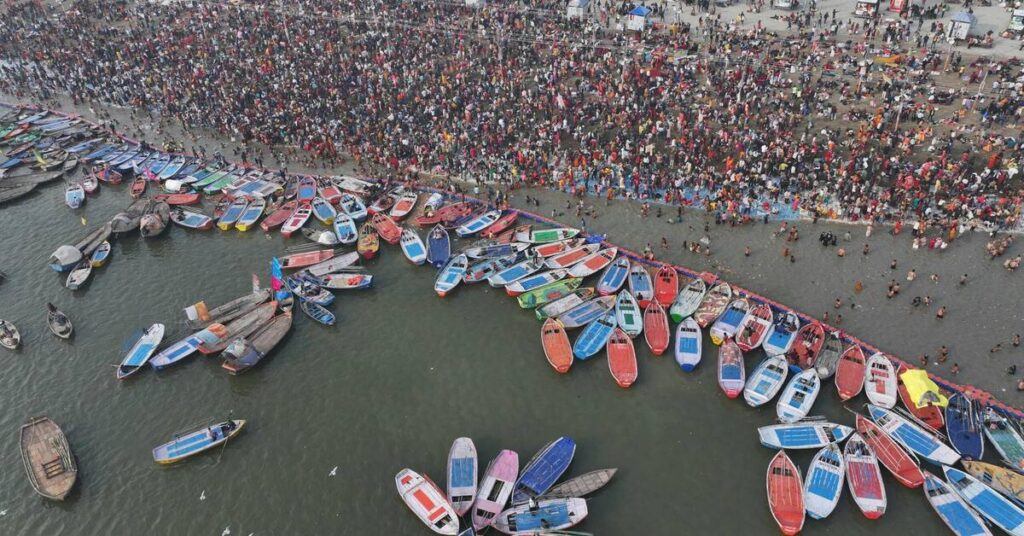
Why Take a Boat to the Sangam?
Before we dive into prices and logistics, let’s understand why taking a boat might be the best decision for your Magh Mela experience.
Spiritual Significance of Reaching the Confluence
The Triveni Sangam isn’t just any point along the riverbank—it’s the precise location where three rivers converge. While bathing anywhere along these rivers during Magh holds spiritual merit, bathing at the actual confluence point is considered especially auspicious. Ancient texts describe this spot as possessing extraordinary purifying power.
Walking into the water from the ghats means you’re bathing in the river, but taking a boat allows you to reach the exact confluence point where you can see the distinct colors of the Ganga and Yamuna merging. This visual and spiritual experience is something many devotees describe as profoundly moving. Being surrounded by the sacred waters on all sides while performing your ritual creates an immersive experience that’s difficult to replicate from the shore.
Practical Advantages Over Walking
Beyond spiritual significance, boats offer practical benefits, especially during peak times. The ghats during Magh Mela can be overwhelmingly crowded, particularly on auspicious bathing dates when millions gather. Navigating through these crowds, finding a suitable spot to bathe, and maintaining personal belongings becomes challenging.
Boats provide a more controlled environment. You avoid the long walks through crowded areas, the jostling for space at the water’s edge, and the concerns about belongings. For elderly devotees, people with mobility issues, or families with small children, boats offer a safer, more comfortable alternative. The journey itself becomes part of the pilgrimage, offering panoramic views of the mela grounds, the rivers, and the spiritual atmosphere that’s unique to this gathering.
Types of Boats Available at Magh Mela
Not all boats are created equal, and understanding your options helps you choose what best fits your needs and budget.
Motorboats
Motorboats are the fastest and most comfortable option. These modern vessels can accommodate 6-15 passengers depending on size and reach the Sangam quickly—typically within 10-15 minutes from major ghats. They’re equipped with safety features like life jackets, proper seating, and often have covered areas protecting passengers from sun or cold wind.
Motorboats are ideal for those with limited time, elderly passengers who might find longer journeys tiring, or anyone preferring modern convenience. They operate throughout the day and are particularly popular during early morning hours when devotees rush for sunrise baths.
Rowing Boats
Traditional rowing boats offer a more authentic, unhurried experience. These smaller vessels typically carry 4-8 passengers and rely on oarsmen to navigate. The journey takes longer—around 20-30 minutes—but many find this slower pace more meditative and spiritually meaningful.
These boats connect you more intimately with the river, without the noise of an engine. You hear the water lapping against the hull, the oars dipping rhythmically, and the sounds of prayers and bells from the shore. For those seeking a contemplative journey, rowing boats provide an experience closer to how pilgrims have approached the Sangam for centuries.
Large Ferries and Group Boats
For bigger groups, families, or those on tighter budgets, larger ferries accommodate 20-50 or even more passengers. These boats make scheduled trips to the Sangam and back, similar to a shuttle service. While less private, they’re significantly more economical per person.
These ferries are popular among organized groups, tour operators, and budget-conscious pilgrims. The communal atmosphere often enhances the spiritual experience, with passengers singing bhajans (devotional songs) together and sharing the collective energy of devotion.
Boat Booking Price Structure
Now for the question everyone asks: How much does it actually cost? Prices vary based on several factors, but here’s a general breakdown to help you budget.
Individual Boat Rides
For single travelers or couples, individual seats on shared boats represent the most economical option. During regular days of Magh Mela, prices typically range from ₹50-150 per person for a basic rowing boat and ₹100-250 per person for motorboats. This covers a round trip to the Sangam, including sufficient time at the confluence for bathing and prayers—usually 30-45 minutes.
These prices apply to standard government-regulated boats operating from official ghats. The cost includes basic safety equipment like life jackets. Some operators charge extra for very early morning trips (4:00-6:00 AM) when demand peaks for sunrise bathing, adding approximately ₹20-50 to the base fare.
Traveling with family or friends? Shared boats accommodate 6-10 people with per-person costs dropping to ₹80-200 depending on boat type and timing. The advantage is having your group together without strangers, while still sharing the cost.
For larger groups of 15-20 people, you might negotiate package rates starting from ₹1,500-3,000 for the entire boat. This works well for organized tours, family gatherings, or community groups. The per-person cost decreases significantly, often dropping to ₹75-150 per person, making it highly economical.
Private Charter Options
Want complete privacy and flexibility? Private boat charters offer exclusive use of a vessel for your party. Small motorboats (6-8 capacity) typically cost ₹2,000-4,000 for a 2-hour charter. Mid-sized boats (10-15 capacity) range from ₹4,000-7,000, while larger vessels (20+ capacity) can cost ₹8,000-15,000.
Private charters allow you to set your own schedule, stay at the Sangam as long as you wish, and enjoy complete privacy for your religious rituals. Some operators offer premium packages including amenities like refreshments, photographer services, or priests to conduct ceremonies aboard the boat.
Factors Affecting Boat Prices
Understanding what influences pricing helps you plan better and potentially save money.
Peak Days vs Regular Days
Boat prices fluctuate significantly based on demand. On major bathing dates—Makar Sankranti, Mauni Amavasya, and Basant Panchami—prices can double or even triple. A motorboat ride that costs ₹150 per person on a regular day might jump to ₹300-500 on these peak dates.
Why? Millions converge for these auspicious baths, and everyone wants to reach the Sangam. Boat operators, knowing demand far exceeds supply, raise prices accordingly. If you have flexibility, consider taking your Sangam Snan on non-peak days for significant savings while still receiving the spiritual benefits.
Time of Day
Sunrise holds special significance, and consequently, early morning slots (4:00-7:00 AM) command premium prices. This is when most Kalpvasis and serious devotees prefer bathing. Expect to pay 30-50% more for these time slots.
Mid-morning to afternoon (9:00 AM-4:00 PM) offers the best value, with prices at their baseline. Evening rides, particularly around sunset, see another price increase though usually not as steep as sunrise slots. If budget is a primary concern and you’re flexible about timing, mid-morning or early afternoon provides the most economical option.
Distance and Duration
Most pricing assumes trips from major ghats like Sangam Ghat, Saraswati Ghat, or nearby launching points—roughly 2-3 kilometers from the confluence. If you’re departing from more distant locations or requesting extended time at the Sangam, prices increase proportionally.
Standard trips allow 30-45 minutes at the Sangam, sufficient for bathing and brief prayers. If you want an hour or more for elaborate rituals, meditation, or simply soaking in the atmosphere, negotiate additional charges upfront—typically ₹200-500 extra depending on the boat type.
Where to Book Boats for Sangam Snan
Knowing where to book ensures you get fair prices and safe, authorized services.
Official Booking Counters
The Magh Mela administration establishes official boat booking counters at major ghats throughout the mela grounds. These counters display standardized rate cards approved by authorities, protecting you from price gouging. Tickets clearly state the boat number, departure time, and agreed-upon terms.
Official counters operate from early morning (around 4:00 AM) until evening (around 7:00 PM), with extended hours on peak bathing days. Payment is typically cash, though some counters now accept digital payments. You receive a receipt that serves as your boarding pass—keep it safe.
The advantage of official counters is guaranteed fair pricing, vetted boat operators, and recourse if problems arise. The disadvantage? During peak times, queues can be long, requiring patience or arriving well before your intended departure time.
Online Booking Platforms
In recent years, online booking has become increasingly available. The official Magh Mela website (run by the UP government) sometimes offers advance booking for boat services, though this is not always consistent year to year. Several private operators and tour companies have also launched online platforms for boat reservations.
Online booking offers convenience—you can secure your slot days or weeks in advance, avoiding queues and uncertainty. Prices are typically slightly higher (₹20-50 premium) to cover platform fees. Pay attention to cancellation policies and verify that the operator is authorized and reputable through reviews and official credentials.
The major limitation is that online booking isn’t yet universally adopted, and availability can be limited. For peak days, however, advance online booking might be your best chance at securing a spot at reasonable prices.
On-Spot Booking at Ghats
Many pilgrims simply arrive at the ghats and book directly with boat operators on site. This offers maximum flexibility—you go when you’re ready, negotiate directly, and see the boat before committing. However, it comes with risks.
Prices quoted at the ghat can be inflated, especially if you’re visibly a tourist or unfamiliar with local customs. Bargaining is often expected and necessary. Always confirm the total price, what’s included, how long you’ll stay at the Sangam, and whether charges are per person or for the entire boat before boarding.
On peak days, on-spot booking can be challenging. Boats fill quickly, and you might wait hours or struggle to find availability. If you’re flexible and visiting during regular days, on-spot booking works fine. For peak dates, advance arrangements are strongly recommended.
Safety Measures and Regulations
Your safety on the water is paramount, and understanding regulations helps ensure a secure experience.
All authorized boats operating at Magh Mela must comply with safety standards set by the Mela administration and District Magistrate’s office. This includes:
Life Jackets: Mandatory for all passengers. Operators must provide properly fitting life jackets, and you should wear them throughout the journey. Don’t be shy about requesting a different size if yours doesn’t fit properly.
Capacity Limits: Each boat has a maximum passenger capacity clearly marked. Overloading is prohibited and dangerous. If you observe a boat being overloaded, refuse to board and report it to authorities.
Licensed Operators: Boatmen must be licensed and registered with authorities. Authorized boats display registration numbers prominently. If you have doubts about a boat’s credentials, ask to see documentation or choose another operator.
Communication Equipment: Larger motorboats should carry basic communication equipment to contact shore in case of emergencies. First aid kits are required on all commercial passenger boats.
Weather Restrictions: Boat operations cease during adverse weather—high winds, heavy rain, or low visibility. Don’t pressure operators to take you out in unsafe conditions.
The Magh Mela period generally sees good weather (cold but dry), making water conditions stable. Still, accidents can happen. Choose authorized operators, follow safety instructions, keep children close, and don’t make sudden movements that might destabilize the boat.
Best Time to Take a Boat Ride
Timing significantly impacts your experience beyond just pricing considerations.
Sunrise (5:00-7:00 AM): Most spiritually significant and visually stunning. Watching the sun rise over the Sangam while performing your ritual bath creates unforgettable memories. However, expect crowds, higher prices, and cold temperatures. Dress warmly and book in advance.
Mid-Morning (8:00-11:00 AM): Excellent compromise. Sun has warmed the air slightly, crowds have thinned from the sunrise rush, and prices drop. Still spiritually meaningful and offering good visibility and comfortable temperatures.
Afternoon (12:00-3:00 PM): Least crowded and most affordable. Perfect for those who prioritize budget and comfort over traditional timing. The sun is warmest (relatively speaking for January), and you’ll have more space and attention from boat operators.
Sunset (4:00-6:00 PM): Growing in popularity, evening baths offer beautiful light, warmer temperatures than sunrise, and a peaceful atmosphere. Prices are moderate. Many find the closing of the day a symbolically meaningful time for purification rituals.
Full Moon and New Moon Days: Regardless of clock time, bathing during Purnima (full moon) and Amavasya (new moon) holds special significance. Plan around the lunar calendar if these are important to your observance.
What to Expect During Your Boat Journey
Understanding the experience helps you prepare mentally and practically.
Upon boarding, the operator verifies your booking and provides life jackets. Find a comfortable position—boats often have simple bench seating. As you push off from the ghat, you’ll immediately notice the change in perspective. The vast mela grounds, temporary tent cities, and lines of pilgrims along the ghats create a remarkable panorama.
The journey to the Sangam takes you past various bathing points, other boats ferrying pilgrims, and sometimes sadhus performing elaborate rituals on smaller boats. Boatmen often point out landmarks and explain the significance of different areas. Don’t hesitate to ask questions—most are proud to share knowledge about this sacred place.
As you approach the confluence, you’ll notice the distinct color where the rivers meet—the Ganga’s clear waters contrasting with the Yamuna’s slightly darker, more sediment-laden flow. This visible merging point is deeply moving for many pilgrims.
At the Sangam, the boat anchors (or the boatman maintains position with oars). This is your time. Most pilgrims perform the following ritual:
- Face east (toward the rising or risen sun)
- Offer prayers and state their sankalp (intention)
- Immerse completely three times, chanting mantras
- Offer water to ancestors and the sun
- Sit in meditation or continued prayer
The boat provides a stable platform, and you enter the water via ladder or steps on the side. The boatman assists and ensures safety. Water depth at the confluence varies but is generally deep—wear your life jacket and follow all safety instructions.
After your ritual, return to your seat. Some pilgrims bring small offerings (flowers, diyas) to release in the water. The return journey offers a different perspective as you head back toward the ghats, perhaps with a sense of completion and spiritual renewal.
Tips for Booking and Riding Boats Safely
Make your experience smooth and secure with these practical tips:
Book in Advance for Peak Days: Don’t wait until the morning of Makar Sankranti or Mauni Amavasya. Book at least 2-3 days ahead, longer if possible.
Verify Credentials: Ensure the boat is authorized and the operator licensed. Official boats display clear identification.
Clarify All Terms Upfront: Confirm total price, duration, what’s included, and any additional charges before boarding. Get it in writing if possible.
Carry Minimal Belongings: Bring only essentials—phone in waterproof pouch, small towel, change of clothes in sealed bag. Leave valuables at your accommodation.
Dress Appropriately: Wear easily removable clothing over swimwear or undergarments suitable for bathing. Bring extra layers for warmth before and after bathing.
Protect Electronics: Waterproof pouches for phones and cameras are essential. Consider leaving them with a trusted family member on shore if you’re unsure about protection.
Follow Safety Instructions: Wear your life jacket properly, don’t stand suddenly or move around unnecessarily, keep children close, and listen to the boatman’s instructions.
Know How to Swim (Preferred): While life jackets provide flotation, knowing how to swim adds a safety layer, especially if performing full immersion.
Watch Weather: If conditions look questionable—high winds, approaching storms—postpone your trip. There’s no spiritual benefit in taking unnecessary risks.
Be Patient and Courteous: Boat operators work long hours serving thousands. Kindness and patience make the experience better for everyone.
Additional Services and Packages
Beyond basic transportation to the Sangam, some operators offer enhanced services:
Photography Packages: Professional photographers accompany your journey, capturing your spiritual experience. Prices range from ₹500-2,000 depending on the number of photos and format (prints or digital).
Priest Services: Some packages include a priest (pandit) who conducts proper Vedic rituals, guides your prayers, and performs ceremonies. Costs vary from ₹500-3,000 based on the complexity and duration of rituals.
Extended Tours: Rather than just going to the Sangam and back, extended boat tours visit multiple ghats, historical sites visible from the water, and provide narrated history and spiritual commentary. These typically last 2-3 hours and cost ₹500-1,000 per person.
Refreshments: Premium packages might include breakfast or snacks served during the journey, particularly on longer tours.
Special Needs Accommodation: Some operators specifically cater to elderly passengers or those with disabilities, offering easier boarding arrangements, more stable boats, and additional assistance. These services may carry surcharges but provide essential support for those who need it.
When considering these additions, book through reputable operators with clear pricing. Verify what’s included to avoid surprises.
Conclusion
Taking a boat to the Sangam during Magh Mela transforms a religious obligation into a transcendent spiritual journey. Yes, you can wade into the holy waters from crowded ghats and receive spiritual merit. But there’s something uniquely powerful about approaching the exact confluence point from the water itself, surrounded by the sacred rivers on all sides, with the sky above and your faith as your guide.
The prices are reasonable for most budgets—from as little as ₹50 per person on shared boats to a few thousand for private charters offering complete comfort and flexibility. Understanding the pricing structure, knowing where to book, and planning according to your priorities helps ensure your experience is both spiritually fulfilling and financially sensible.
Safety, managed through proper regulations and personal vigilance, means you can focus on what truly matters: the spiritual cleansing and renewal that brought you to this holy place. Whether you’re performing Kalpvas for a full month or visiting for a single sacred dip, the boat journey to the Sangam will likely become one of your most cherished memories of Magh Mela.
So as you plan your pilgrimage, consider including a boat ride to the Triveni Sangam. The rivers await, ancient and eternal, ready to receive your devotion and offer their blessings in return.
FAQs
1. Is boat booking mandatory, or can I just walk into the Sangam from the ghats?
Boat booking is not mandatory—you can absolutely walk into the water from any of the numerous ghats along the riverbanks. However, walking only gets you into the river, not to the exact confluence point where the three rivers meet, which is located some distance from the shore and requires a boat to reach. Many devotees are satisfied bathing from the ghats and consider it equally auspicious. The boat option is for those who specifically want to bathe at the precise Sangam point or who find boats more convenient given the crowds at the ghats.
2. Are there age restrictions for taking boats to the Sangam?
There are no strict age restrictions, but practical considerations exist. Very young children (infants and toddlers) require constant supervision and appropriate flotation devices. Elderly individuals should honestly assess their ability to board boats (which can be unstable), sit for 30-45 minutes, and manage the ladder for bathing. Most operators welcome all ages but recommend that very young children and elderly passengers be accompanied by able-bodied family members. People with serious mobility limitations should inform operators in advance so appropriate boats and assistance can be arranged.
3. What happens if the weather turns bad after I’ve booked my boat?
Boat operations are suspended during adverse weather conditions for safety reasons. If weather deteriorates before your scheduled departure, trips are cancelled and you’re entitled to a full refund or rescheduling. If you’ve booked through official channels, approach the booking counter with your receipt to arrange the refund or alternative timing. For private operators, refund policies vary—clarify their weather cancellation policy when booking. Generally, operators don’t want to take boats out in unsafe conditions regardless of bookings, as their safety certifications and licenses depend on following regulations.
4. Can I perform elaborate religious ceremonies on the boat?
Basic rituals and prayers are certainly possible and common. Most pilgrims perform simple immersion, prayers, and offerings. For more elaborate ceremonies requiring equipment, fire (diyas), or extended time, you’ll need to arrange a private charter and inform the operator in advance. Some rituals might not be feasible due to safety concerns—anything involving open flame requires special permission and precautions. If you’re planning specific ceremonies, discuss them with your boat operator beforehand to ensure they can accommodate your needs. Some operators specialize in this and work with priests who perform ceremonies aboard.
5. Is it safe to take valuables on the boat, or should I leave them at my accommodation?
Leave all non-essential valuables at your accommodation. Bring only what you absolutely need: a small amount of cash for offerings or emergencies, perhaps your phone in a waterproof pouch (if you must), and minimal religious items. Boats have limited secure storage, and the bathing ritual means items might get wet or could fall into the river. Most camps and hotels offer safe deposit facilities—use them for jewelry, documents, excess cash, and electronics. The more you bring, the more you need to worry about, which detracts from the spiritual focus of your journey. Travel light and travel worry-free.



[…] luxury Ganga cruise packages in Varanasi from ₹2499. Exclusive boats with gourmet dining, live music & VIP aarti viewing. […]